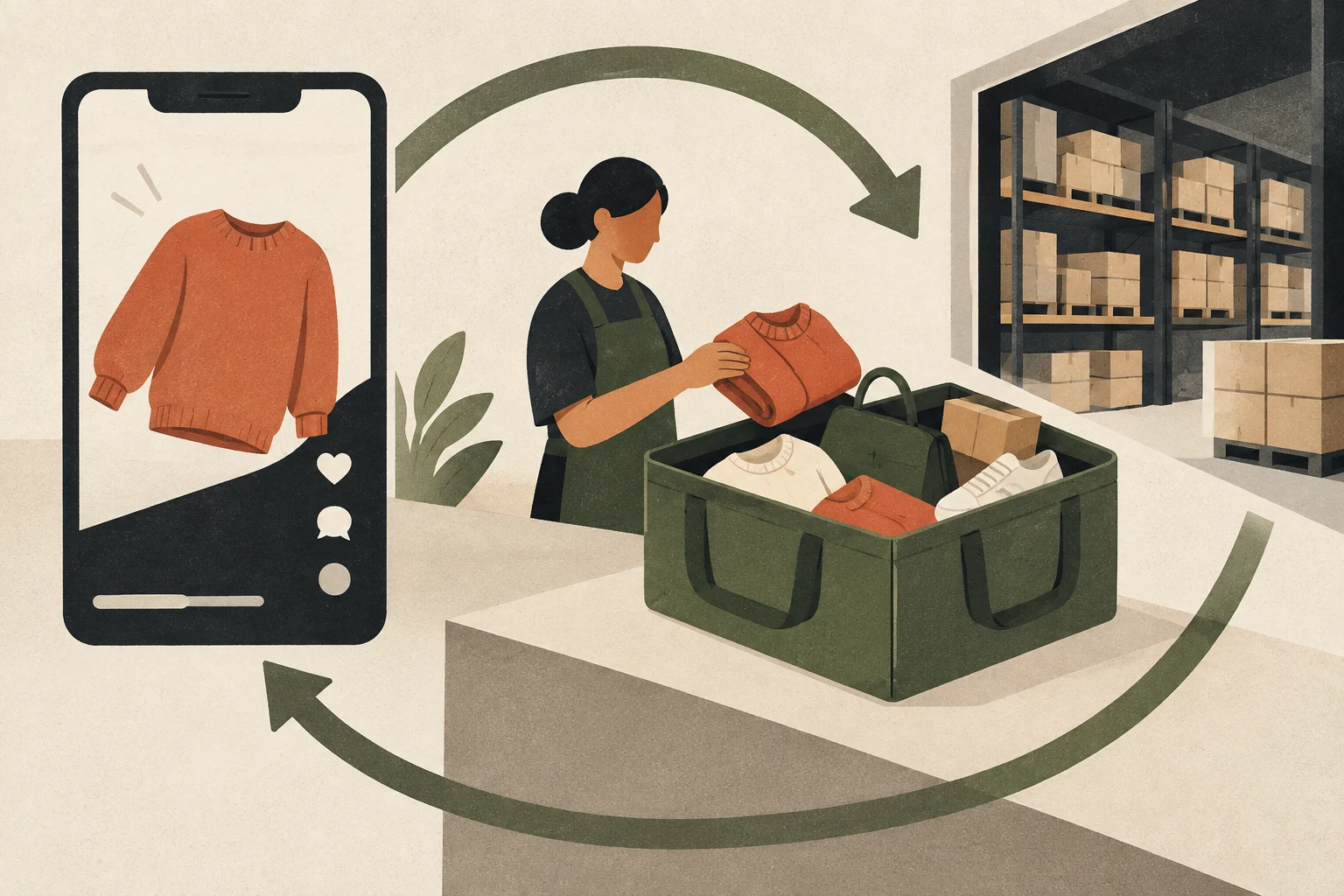
TikTok Shop shoppers in the United States can now return eligible purchases through UPS-owned Happy Returns without a shipping box or printed label. The service is available through participating sellers, whether they fulfil orders themselves or use TikTok Shop's fulfilment operation.
Happy Returns announced the integration on 15 September. It brings the company's physical drop-off network into the same app where shoppers discover products and pay for them, extending social shopping into the less visible work of refunds, inspections and getting stock back to sellers.
A return starts inside TikTok Shop
For an eligible order, the shopper starts the return in TikTok Shop, selects Happy Returns and takes the item to a Return Bar. Happy Returns says its US network has nearly 10,000 locations. Staff scan and verify the item before accepting it; the returned goods are then grouped together and transported through UPS rather than sent back as separate customer parcels.
In a 23 September explanation of the service, Happy Returns says the integration combines checks at drop-off, behavioural risk scoring and its Return Vision auditing technology. The company says verified drop-offs can trigger refunds on the spot. Eligibility still depends on the order and the participating seller; the network's size does not mean every TikTok purchase can be returned at every location.
Happy Returns reports an average of about seven days for goods to reach retailers across its network. That figure is a company-wide operating measure, not a published result for TikTok Shop orders. The company has not disclosed a TikTok-specific reduction in fraud, processing cost or time to restock.
Retailers are committing stock and airtime
Boots announced a UK TikTok Shop debut for 28 September, starting with selected No7 skincare and beauty ranges and a LIVE shopping event. Its plan assigns shop setup, live shopping and the social-commerce experience to THG Commerce, with THG Fulfil handling fulfilment. The 55% year-on-year growth in TikTok Shop LIVE sales cited by Boots comes from TikTok's internal data.
JTV scheduled 56 hours of TikTok Shop live programming for 28 September to 4 October, up from its usual 30 hours a week. The jewellery retailer's event includes creator appearances, product demonstrations, new launches and giveaways. The longer schedule measures airtime committed to the platform; JTV has not published sales results for the event.
Best Buy is preparing a late-October TikTok Shop launch with nearly 10,000 products, including headphones, cameras, laptops and small appliances. It says it will fulfil those orders and handle eligible returns in stores or by mail. Its announcement does not say Best Buy is adopting Happy Returns. For advertisers, Best Buy also plans to connect creator campaigns to its own customer data and sales measurement.
These companies are building different parts of a social-commerce operation: programmes that attract viewers, stock that can be bought inside the app and routes for returning it afterwards. Their announcements do not establish that TikTok Shop is replacing retailers' own ecommerce channels. Comparable sales, repeat-purchase and returns figures would be needed to judge how the channel performs beyond the launch activity.